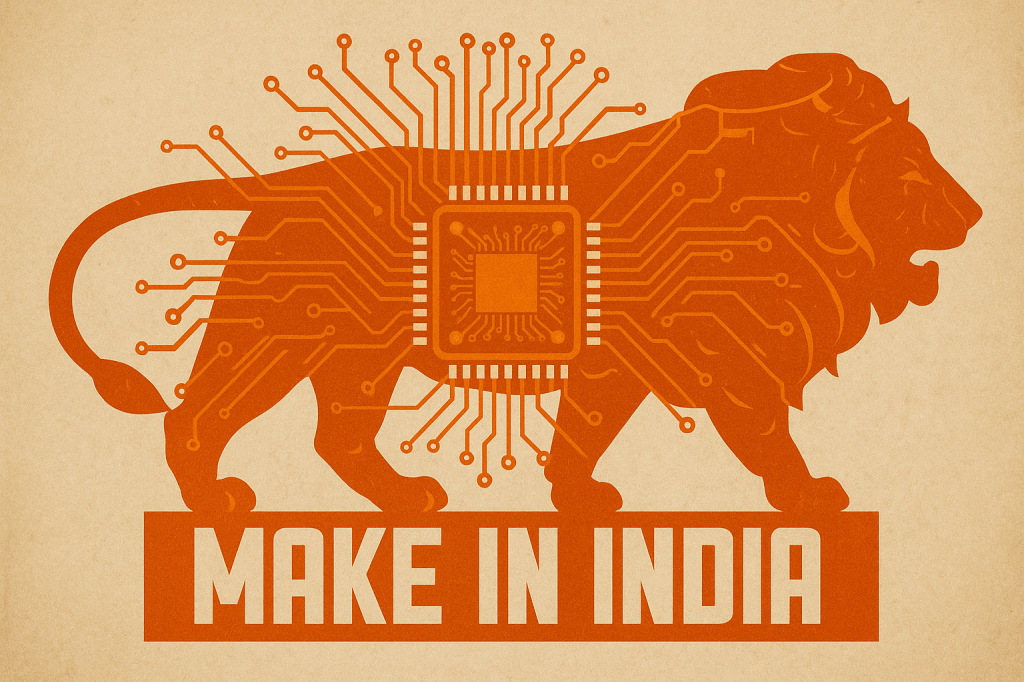
India stands at a critical juncture where global geopolitics, technology, and economics converge. The semiconductor industry, a vital backbone for today’s technology-driven economies, has become increasingly significant amidst global uncertainties. Recent geopolitical tensions, particularly China’s aggressive stance toward Taiwan—the world’s largest semiconductor manufacturer—present India with a unique opportunity. By establishing a robust semiconductor industry through the “Make in India” initiative, India can strategically benefit from these shifting geopolitical landscapes.
Why the Semiconductor Industry Matters to India
Semiconductors are the brains behind every digital device—from smartphones and laptops to advanced military equipment. The COVID-19 pandemic exposed the vulnerabilities of over-dependence on foreign semiconductor manufacturing, severely impacting automotive, consumer electronics, and telecommunications industries worldwide.
Currently, India imports nearly all its semiconductor chips, making it vulnerable to global supply disruptions. Developing a domestic semiconductor industry is no longer optional—it is essential for economic security, technological sovereignty, and sustained economic growth.
Geopolitical Tensions: India’s Strategic Advantage
China’s Increasing Aggression Towards Taiwan
Taiwan is the semiconductor capital of the world, manufacturing over 60% of global chips through giants like Taiwan Semiconductor Manufacturing Company (TSMC). China’s intensified threats and military posturing around Taiwan have heightened concerns over the stability of semiconductor supply chains globally. Any disruption due to geopolitical conflicts could severely cripple global electronics and automotive industries.
This volatile geopolitical scenario provides India an unprecedented window to step in as a reliable alternative, significantly enhancing its geopolitical leverage.
Global Need for Diversification
Major global players, including the United States, Japan, South Korea, and Europe, are actively seeking to diversify semiconductor supply chains away from Taiwan and China due to security and reliability concerns. India, with its stable democratic governance, abundant skilled labor, and growing tech industry, is perfectly positioned to fill this gap.
Advantages of India as a Semiconductor Manufacturing Hub
1. Strong Government Support and Incentives
India’s government has prioritized the semiconductor industry under its “Make in India” initiative. Attractive incentive programs, including financial assistance, tax rebates, and infrastructure support, have been introduced to attract global chip manufacturers.
2. Abundant Talent Pool
India’s vast pool of skilled engineers and IT professionals makes it ideally suited for semiconductor research, development, and production. With strong educational institutions specializing in technology, India can rapidly scale up capabilities in this sector.
3. Cost Competitiveness
Compared to other manufacturing hubs such as Taiwan, South Korea, and the United States, India offers significantly lower labor and operational costs. This makes India a highly competitive destination for semiconductor manufacturers aiming for profitability and scalability.
4. Growing Domestic Market Demand
India’s consumer electronics and automotive sectors are rapidly growing. Domestic demand alone justifies the establishment of semiconductor manufacturing units, reducing dependency on volatile external markets.
Challenges and the Road Ahead
While the opportunity is immense, India faces several challenges, including:
- High initial investment costs: Semiconductor manufacturing requires billions of dollars in upfront investment.
- Technological complexity: Expertise in advanced semiconductor manufacturing is limited and requires strategic foreign collaborations.
- Infrastructure readiness: Ensuring consistent power supply, water availability, and logistics infrastructure is critical.
However, these challenges are manageable with focused policies, international partnerships, and targeted government investments.
Conclusion: A Strategic Imperative for India
The global geopolitical environment, particularly China’s assertiveness towards Taiwan, has reshaped the strategic dynamics of the semiconductor industry. India, with its strategic location, skilled workforce, and supportive policy environment, has a golden opportunity to emerge as a significant player in global semiconductor manufacturing.
By capitalizing on the current geopolitical climate and aggressively promoting its “Make in India” semiconductor initiative, India can secure its economic future, reduce strategic vulnerabilities, and become a trusted global semiconductor hub.
Disclaimer : The views expressed in this blog are solely my own and do not represent any organization. Content is opinion-based and not intended as factual or professional political advice.


 World Market Trends
Leave a comment