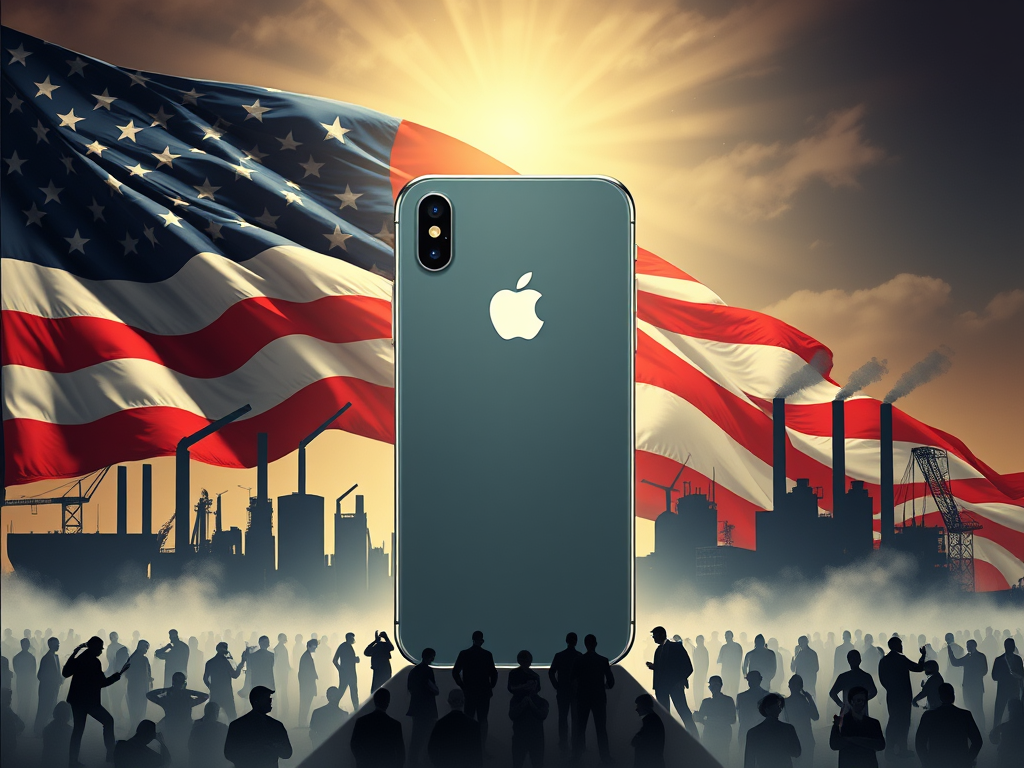
On May 23, 2025, former U.S. President Donald Trump issued a stern warning to Apple Inc., threatening a 25% import tariff on iPhones not manufactured within the United States. This directive aims to accelerate the reshoring of Apple’s production but presents significant economic and logistical challenges.Axios+8The Guardian+8@EconomicTimes+8
The Tariff Threat and Its Immediate Effects
President Trump emphasized that iPhones sold in the U.S. must be produced domestically, stating, “If that is not the case, a Tariff of at least 25% must be paid by Apple to the U.S.” This ultimatum led to a 3% drop in Apple’s stock price, erasing approximately $70 billion in market value .@EconomicTimes+4Investopedia+4CBS News+4WSJ
Economic Challenges of U.S. Manufacturing
1. High Production Costs
Manufacturing iPhones in the U.S. would significantly increase production costs. Analysts estimate that the cost of a U.S.-made iPhone could rise to $3,500, more than triple the current price of high-end models . This surge in costs could make iPhones unaffordable for many consumers.Fox BusinessReutersThe Washington Post
2. Supply Chain Overhaul
Apple’s current supply chain is heavily reliant on China, where approximately 80% of its production capacity resides . Shifting production to the U.S. would require a complete overhaul of this supply chain, involving the establishment of new supplier relationships and logistics networks.INDmoney
3. Skilled Labor Shortage
The U.S. lacks the specialized labor force required for high-precision electronics assembly. While automation could alleviate some of this gap, current robotics technology is not advanced enough to replace the intricate manual labor involved in iPhone assembly .
Logistical Complications
1. Infrastructure Limitations
Setting up manufacturing facilities in the U.S. would necessitate significant investments in infrastructure, including factory construction, equipment procurement, and workforce training. These endeavors would span several years and require substantial capital.
2. Supply Chain Disruptions
Transitioning to domestic production could disrupt Apple’s existing supply chain, leading to delays and inefficiencies. The company would need to establish new sourcing strategies for components currently supplied by international vendors.
Strategic Implications for Apple
1. Financial Strain
The proposed tariff and the associated costs of reshoring production could strain Apple’s financial resources. The company has already projected an additional $900 million in expenses for the current quarter due to existing tariffs .The Washington Post+1CBS News+1
2. Market Positioning
Raising iPhone prices to offset increased production costs could impact Apple’s competitive edge in the smartphone market. Consumers might turn to more affordable alternatives, affecting Apple’s market share.15 Minute News
3. Brand Perception
Apple’s commitment to innovation and quality could be questioned if the company struggles to meet production demands or faces delays due to the reshoring process. Maintaining brand reputation will be crucial during this transition.
Conclusion
While the U.S. government’s push for domestic manufacturing aims to bolster the economy, the proposed 25% tariff on non-U.S.-made iPhones presents significant economic and logistical challenges for Apple. The company must carefully evaluate the feasibility of reshoring production, considering the potential impact on costs, supply chains, and market positioning. A balanced approach that includes phased implementation and strategic planning will be essential for a successful transition.Reuters
The information provided in this blog is for general informational purposes only and reflects publicly available data and news as of May 2025. While every effort has been made to ensure accuracy, economic and political developments can change rapidly. Readers should consult official sources or financial experts before making any decisions based on the content of this blog.


 World Market Trends
Leave a comment