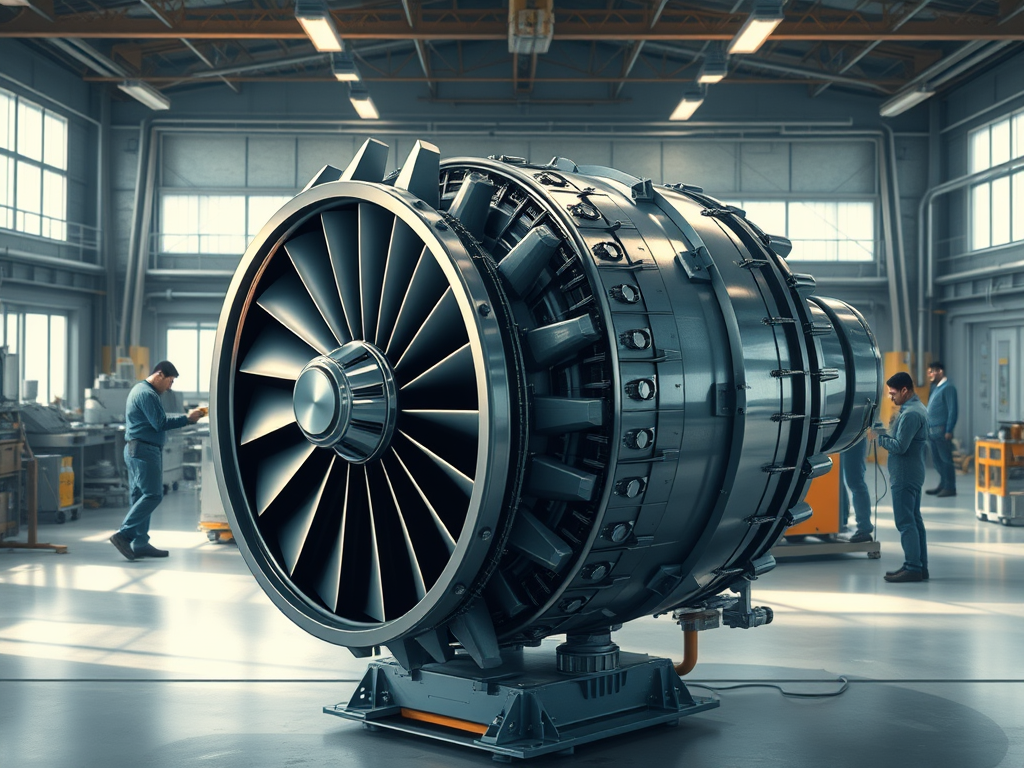
In recent years, India has been making significant strides in the development of its indigenous defense technologies, with one of the most ambitious and crucial projects being the Kaveri jet engine. The Kaveri engine represents India’s commitment to achieving self-reliance in defense manufacturing, reducing dependence on foreign technology, and enhancing national security. In this blog, we will delve into the significance of the Kaveri jet engine project, its development process, challenges, and how it plays a pivotal role in India’s aerospace ambitions.
1. What is the Kaveri Engine?
The Kaveri Engine is an indigenous jet engine designed and developed by the Gas Turbine Research Establishment (GTRE) in India. It was initially intended for the Tejas, India’s lightweight multirole supersonic fighter aircraft, developed by the Hindustan Aeronautics Limited (HAL). The primary goal of the Kaveri engine is to provide India with a domestically manufactured, state-of-the-art powerplant capable of meeting the demands of modern combat aircraft.
The engine is named after the Kaveri River, which holds cultural and geographical significance in India. This project is part of the Indian government’s broader “Make in India” initiative, which aims to make the country self-sufficient in critical defense technologies.
2. The Importance of the Kaveri Engine for India’s Defense Sector
Reducing Dependency on Foreign Technology
For decades, India has relied heavily on foreign suppliers for advanced military technologies, including jet engines. The Kaveri engine project is an essential step toward reducing this dependence on countries like Russia, the United States, and the United Kingdom for defense-related technologies. By developing indigenous jet engines, India aims to achieve greater autonomy over its defense needs, making the nation less vulnerable to international politics and supply chain disruptions.
Boosting India’s Aerospace Industry
The development of the Kaveri engine has also spurred growth in India’s aerospace industry. The project has led to advancements in material science, precision engineering, and system integration. In addition, it has helped foster a robust defense ecosystem in India, providing opportunities for domestic companies to engage in defense manufacturing and R&D activities. This, in turn, strengthens the country’s aerospace capabilities and positions it as a player in the global defense market.
Enhancing National Security
With an indigenous jet engine, India can significantly enhance its national security. The Kaveri engine is expected to provide the Indian Air Force with an aircraft engine capable of competing with other advanced international engines, improving the performance and longevity of Indian-made fighter jets like the Tejas. This move toward self-reliance in defense technology also strengthens India’s geopolitical standing, particularly in a region where security concerns and defense competition are high.
3. The Development of the Kaveri Engine: Challenges and Milestones
Challenges Faced
The Kaveri engine project has been a long and challenging journey. Launched in the late 1980s, the development of the engine faced numerous technical and operational challenges. The primary obstacle was the difficulty in achieving the required thrust-to-weight ratio and performance levels needed for modern combat aircraft.
Additionally, material technology, such as the development of high-temperature-resistant alloys, and turbine blade technology, posed significant hurdles. Limited access to foreign knowledge and expertise in these areas also slowed the project’s progress. However, despite these challenges, India has made significant advancements in indigenous technology.
Key Milestones
Over the years, several important milestones have been achieved in the Kaveri engine project. Some of these include:
- Successful Ground Tests: In 2003, the Kaveri engine passed its first major milestone with successful ground testing, marking a crucial step toward its integration into aircraft.
- Flight Tests: In 2014, a prototype of the Kaveri engine was successfully tested on a Tejas aircraft. This achievement was a major breakthrough for India’s aerospace capabilities.
- Technological Advancements: Continuous efforts have been made to improve the engine’s efficiency, reliability, and integration with different types of fighter aircraft. The engine’s ability to function in various conditions is continually tested, ensuring it meets the stringent requirements of modern combat.
4. Future of the Kaveri Engine and Its Role in the ‘Make in India’ Initiative
Tejas Mk II and Beyond
The Kaveri engine’s development is crucial to the success of the Tejas Mk II program. The Tejas Mk II is a more advanced version of the Tejas fighter, with improved avionics, better maneuverability, and increased weapon-carrying capacity. The indigenous Kaveri engine, once fully optimized, will power these advanced fighter jets, giving India a significant edge in the field of air combat.
In the future, the Kaveri engine may also be integrated into other defense platforms, including unmanned aerial vehicles (UAVs), transport aircraft, and other military jets, expanding its role in India’s defense strategy.
Indigenous Defense Innovation
The Kaveri engine symbolizes India’s shift toward becoming a hub for indigenous defense innovation. With increasing investment in research and development, India is steadily building its capabilities in areas like missile technology, radar systems, and advanced fighter jets. The success of the Kaveri project will further cement India’s position as a self-reliant defense powerhouse and a significant contributor to global aerospace and defense innovation.
5. Conclusion: Kaveri Engine and India’s Path to Self-Reliance
The Kaveri engine is a testament to India’s growing ambition to achieve self-sufficiency in defense technology. While the journey has been fraught with challenges, the progress made in developing this indigenous jet engine has far-reaching implications for India’s defense and aerospace sectors. By reducing reliance on foreign suppliers and creating a robust domestic defense industry, the Kaveri engine stands as a symbol of India’s growing capabilities and its commitment to securing its future in an increasingly complex and competitive global landscape.
As India continues to invest in defense R&D, the Kaveri engine could pave the way for further advancements, ultimately contributing to the country’s goal of achieving “Atmanirbhar Bharat” (self-reliant India). The future of India’s defense sector looks promising, and the Kaveri engine is undoubtedly a cornerstone of that future.
Disclaimer: This blog is for informational purposes only. The content presented in this post reflects the current understanding of the Kaveri engine project and its significance as of the publication date. While every effort has been made to provide accurate and up-to-date information, the details may change as the project evolves. Readers are encouraged to verify specific technical details and updates from official sources or authoritative entities.


 World Market Trends
Leave a comment